PDF to Text Online – Extract Text from PDF
Export text from editable PDF pages and use it in any text editor
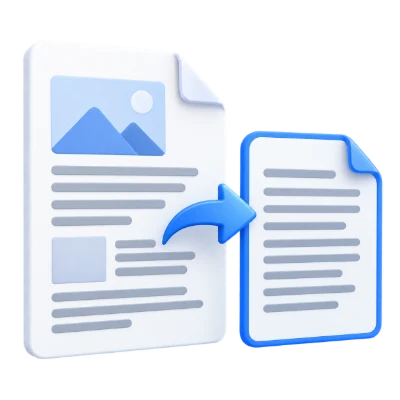
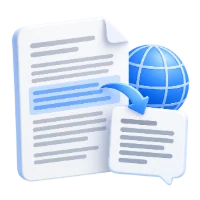
PDF to Text is a free online tool that extracts text from editable PDF files and outputs it as plain text so you can copy, edit, and reuse your content easily.
PDF to Text is a simple online converter designed to help you quickly extract text from PDF pages when the PDF content is editable (text-based). If you need a PDF to text converter to reuse paragraphs, capture document content, or move text into another workflow, this tool lets you export the text from your PDF and send it to any text editor. It runs in your browser, requires no installation, and focuses on producing a clean text output you can work with immediately.
What PDF to Text Does
- Extracts text from editable (text-based) PDF files
- Converts PDF content into plain text for copying and reuse
- Helps export text from PDF pages to use in any text editor
- Processes files online without installing software
- Makes it easier to reuse PDF text in documents, notes, and drafts
- Provides a quick way to turn a PDF into a text-based output
How to Use PDF to Text
- Upload your PDF file
- Run the conversion to extract the text
- Review the extracted text output
- Copy or download the text result
- Paste the text into your preferred text editor
Why People Use PDF to Text
- Copy text from a PDF without retyping
- Reuse PDF content in emails, documents, or notes
- Extract text for quoting and referencing
- Create a plain-text version of a text-based PDF
- Work with PDF content in tools that accept TXT input
Key PDF to Text Features
- Free online PDF to text conversion
- Extracts text from editable PDFs (not scanned images)
- Plain-text output suitable for most editors
- Works directly in the browser without installation
- Fast text export for everyday document workflows
- Useful for copying, editing, and repurposing PDF content
Common PDF to Text Use Cases
- Extracting text from reports for summaries and drafts
- Copying content from PDF contracts or letters for review
- Reusing PDF text in a new document or template
- Collecting quotes and excerpts for research
- Creating a text-only version of documentation
What You Get After Converting
- Extracted text you can copy, paste, or save
- A plain-text output that can be opened in common editors
- Reusable PDF content for writing, editing, and referencing
- Faster workflows compared to manual retyping
- A practical text export for text-based PDFs
Who PDF to Text Is For
- Students extracting text from PDFs for notes and assignments
- Professionals reusing content from reports and documents
- Researchers collecting quotes and excerpts from PDF sources
- Editors and writers turning PDF content into editable drafts
- Anyone who needs to convert an editable PDF into plain text
Before and After Using PDF to Text
- Before: Text is locked inside an editable PDF and hard to reuse quickly
- After: Text is extracted and ready to paste into any editor
- Before: Manual retyping is needed to edit or repurpose PDF content
- After: You can copy and edit the extracted text immediately
- Before: Sharing content requires sending the full PDF file
- After: You can share the relevant text in a lightweight format
Why Users Trust PDF to Text
- Simple, focused tool for extracting text from editable PDFs
- Works online with no software installation required
- Clear output designed for copying and editing in text editors
- Designed for quick conversions and everyday productivity
- Part of the i2PDF online tool suite
Important Limitations
- Works best with editable (text-based) PDFs; scanned PDFs may not produce usable text
- Complex layouts (columns, headers/footers) can affect reading order in plain text
- Non-text elements (images, charts) are not converted into editable text
- Some fonts or embedded encodings may lead to unexpected characters in output
Other Names for PDF to Text
Users may search for PDF to Text using terms like extract text from PDF, PDF to TXT, PDF text extractor, pdf2text, or pdftotext.
PDF to Text vs Other PDF Text Extraction Methods
How does PDF to Text compare to other ways of getting text out of a PDF?
- PDF to Text: Quick online tool to extract text from editable PDFs into plain text
- Copy/paste from a PDF viewer: Can be slow and inconsistent for long documents or structured layouts
- OCR tools: Better suited for scanned PDFs and images, but not necessary for editable PDFs
- Use PDF to Text When: You have a text-based PDF and need a fast, editor-friendly text export
Frequently Asked Questions
It extracts text from editable PDF pages and converts it into plain text so you can copy, edit, or reuse it.
Yes. PDF to Text is a free online tool you can use directly in your browser.
PDF to Text is designed for editable (text-based) PDFs. For scanned PDFs, you typically need OCR to recognize text from images.
The output is plain text (TXT-style) that you can copy or use in common text editors.
Some PDFs use complex layouts (such as columns, headers, or positioned text). Plain-text extraction may not always preserve the visual reading order.
Extract Text from Your PDF Now
Upload an editable PDF to export its text in seconds.
Related PDF Tools on i2PDF
Why PDF to Text ?
The Portable Document Format, or PDF, has become ubiquitous in the digital landscape. Its ability to preserve formatting across different platforms and operating systems makes it ideal for sharing documents intended to be viewed as they were designed. However, the very features that make PDFs so reliable for visual presentation can also hinder their usability when the need arises to manipulate, analyze, or repurpose the text they contain. This is where the process of converting PDF to text becomes critically important, unlocking a wealth of possibilities across various fields and applications.
One of the most significant benefits of extracting text from PDFs lies in its contribution to accessibility. While PDFs can be made accessible to screen readers and other assistive technologies, the process often requires meticulous tagging and structuring, which is frequently overlooked. Converting a PDF to a plain text format removes the reliance on these tags and allows screen readers to easily interpret and vocalize the content. This is particularly crucial for individuals with visual impairments, enabling them to access information that might otherwise be inaccessible. Furthermore, plain text is inherently more adaptable to different screen sizes and devices, making it easier for users with limited dexterity or motor skills to navigate and interact with the content. By converting PDFs to text, we move towards a more inclusive digital environment where information is readily available to everyone, regardless of their abilities.
Beyond accessibility, the ability to extract text from PDFs is essential for data analysis and research. Many academic papers, reports, and datasets are distributed in PDF format. While viewing these documents is straightforward, extracting data for analysis can be a laborious and time-consuming process if done manually. Converting these PDFs to text allows researchers to utilize powerful text mining and natural language processing (NLP) techniques. They can identify patterns, extract key information, analyze sentiment, and build statistical models based on the textual content. This capability is invaluable in fields like social sciences, humanities, and scientific research, where analyzing large volumes of textual data is crucial for uncovering insights and advancing knowledge. Imagine, for example, a researcher studying the evolution of political discourse. By converting a collection of PDF documents containing speeches and articles to text, they can use NLP tools to track the frequency of certain keywords, analyze shifts in sentiment, and identify influential figures. This kind of in-depth analysis would be nearly impossible without the ability to extract and process the underlying text.
Furthermore, converting PDF to text is essential for efficient document management and archiving. While PDFs are excellent for preserving the visual appearance of documents, they can be difficult to search and index. Text-based formats, on the other hand, are easily searchable, allowing users to quickly locate specific information within a large collection of documents. By converting PDFs to text, organizations can create searchable archives that are much more accessible and user-friendly. This is particularly important for businesses and government agencies that need to comply with regulations regarding data retention and access. Imagine a law firm that needs to quickly find all documents related to a specific case. By converting all their PDF files to text, they can use keyword searches to instantly locate relevant information, saving valuable time and resources. The ability to efficiently search and retrieve information is crucial for effective decision-making and operational efficiency.
The repurposing of content is another area where converting PDF to text proves invaluable. Often, information contained in a PDF needs to be incorporated into other documents, presentations, or websites. Manually retyping the text is not only time-consuming but also prone to errors. Converting the PDF to text allows users to easily copy and paste the content into other applications, ensuring accuracy and saving significant time. This is particularly useful for content creators, marketers, and educators who frequently need to adapt and reuse existing materials. For example, a teacher might want to extract text from a PDF textbook to create a customized handout for their students. Or a marketer might want to repurpose content from a PDF report into a series of blog posts. The ability to easily extract and reuse text from PDFs allows for greater flexibility and efficiency in content creation.
Finally, the conversion of PDF to text plays a crucial role in optical character recognition (OCR) technology. Many PDFs are created from scanned documents, which means they contain images of text rather than actual text. While these PDFs can be viewed, the text cannot be selected, copied, or searched. OCR technology uses algorithms to analyze the image of the text and convert it into machine-readable text. The process of converting a scanned PDF to text is often the first step in making the document fully accessible and searchable. This is particularly important for preserving historical documents, digitizing library collections, and making government records available online. The ability to convert scanned PDFs to text unlocks a vast repository of information that would otherwise be inaccessible to modern technology.
In conclusion, the ability to convert PDF to text is far more than just a convenient feature; it is a critical necessity in today's digital world. From enhancing accessibility for individuals with disabilities to facilitating data analysis, improving document management, enabling content repurposing, and powering OCR technology, the benefits of extracting text from PDFs are wide-ranging and impactful. As our reliance on digital documents continues to grow, the importance of this seemingly simple process will only become more pronounced. By embracing the power of PDF to text conversion, we can unlock the full potential of the information contained within these ubiquitous files and create a more accessible, efficient, and informed society.
How to PDF to Text ?
This video will show in detail how to PDF to text.