

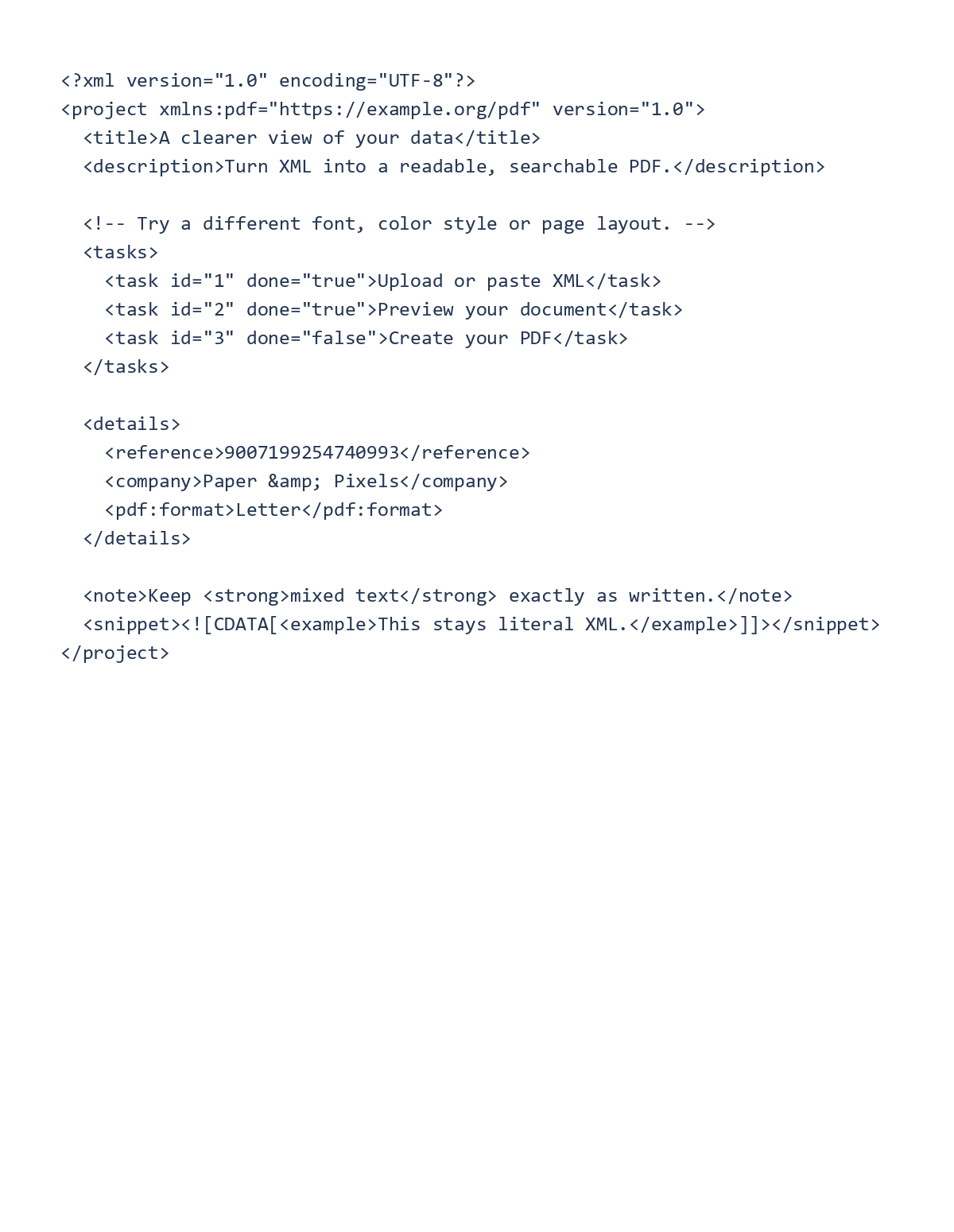
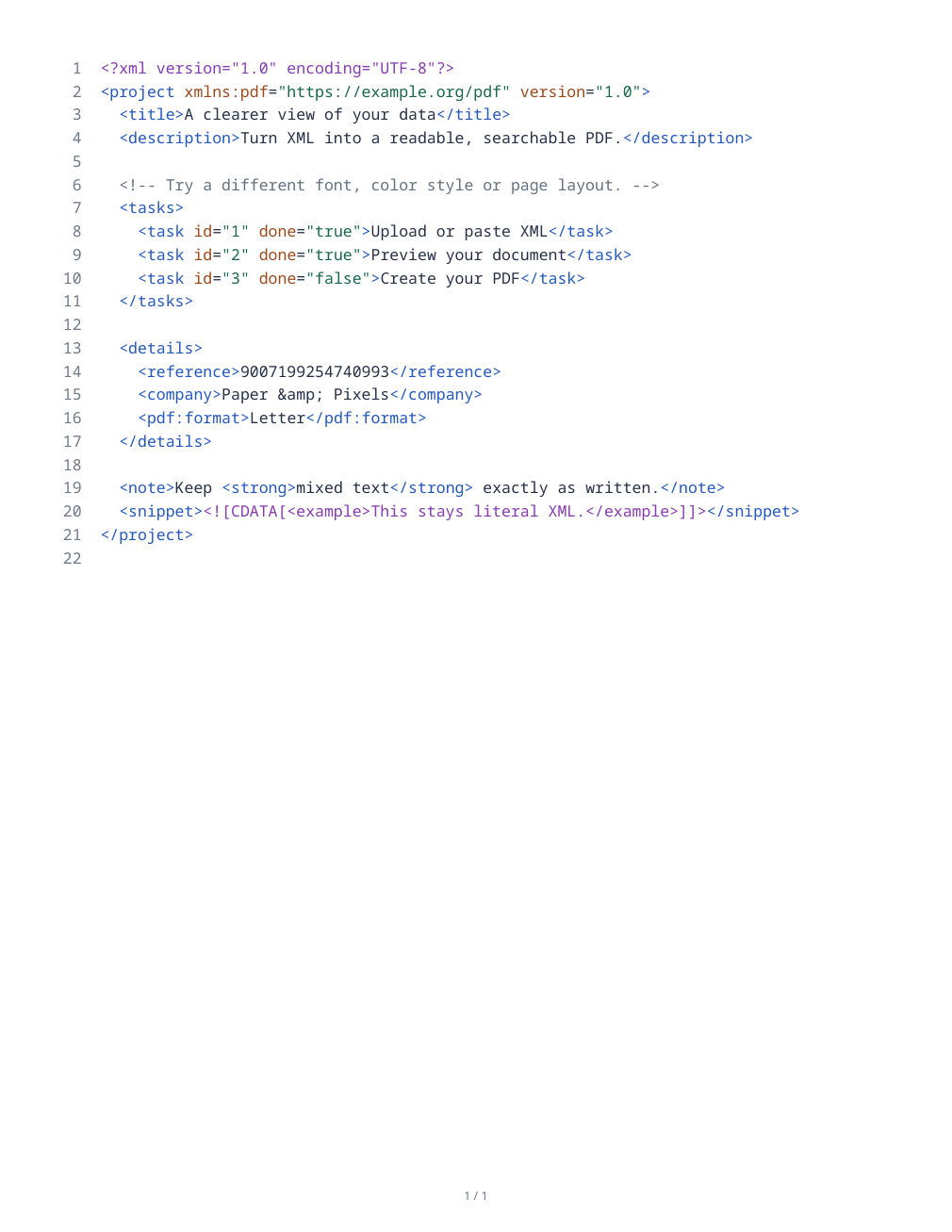

Open XML to PDF to print structured source as a readable document. The result is a source listing; it is not a spreadsheet or an automatically designed report.
Open and validate the source
Upload an XML file or paste the source into the editor. Review any validation message and use the reported error location to fix malformed content before exporting.
Check matching tags, attributes and namespace declarations. Well-formed XML is required, but this is not validation against your application’s XML schema.
Choose formatting and paper
Keep As written initially because whitespace can matter in XML. Optional formatting adjusts suitable element indentation while preserving mixed text and protected whitespace regions.
The initial paper is Letter portrait with half-inch margins and 10-point text. Keep wrapping enabled for long lines, choose syntax colors or a monochrome style and review the paginated preview.
Export and verify the listing
Choose the export action and open the downloaded PDF. Compare representative values, Unicode text and the final record with the source. Check for clipped lines or unexpected page breaks.
Retain the original source file for software that needs structured data. A PDF listing is a human-readable copy and does not replace the machine-readable file.
Common questions
Does formatting apply an XSL stylesheet?
No. This tool prints the XML source itself; it does not run stylesheet transformations.
Can I keep the original source layout?
Choose As written and review line wrapping. The paper width still affects how long lines fit on the PDF page.
Try it with your document
Review the result, then save the version you need.