
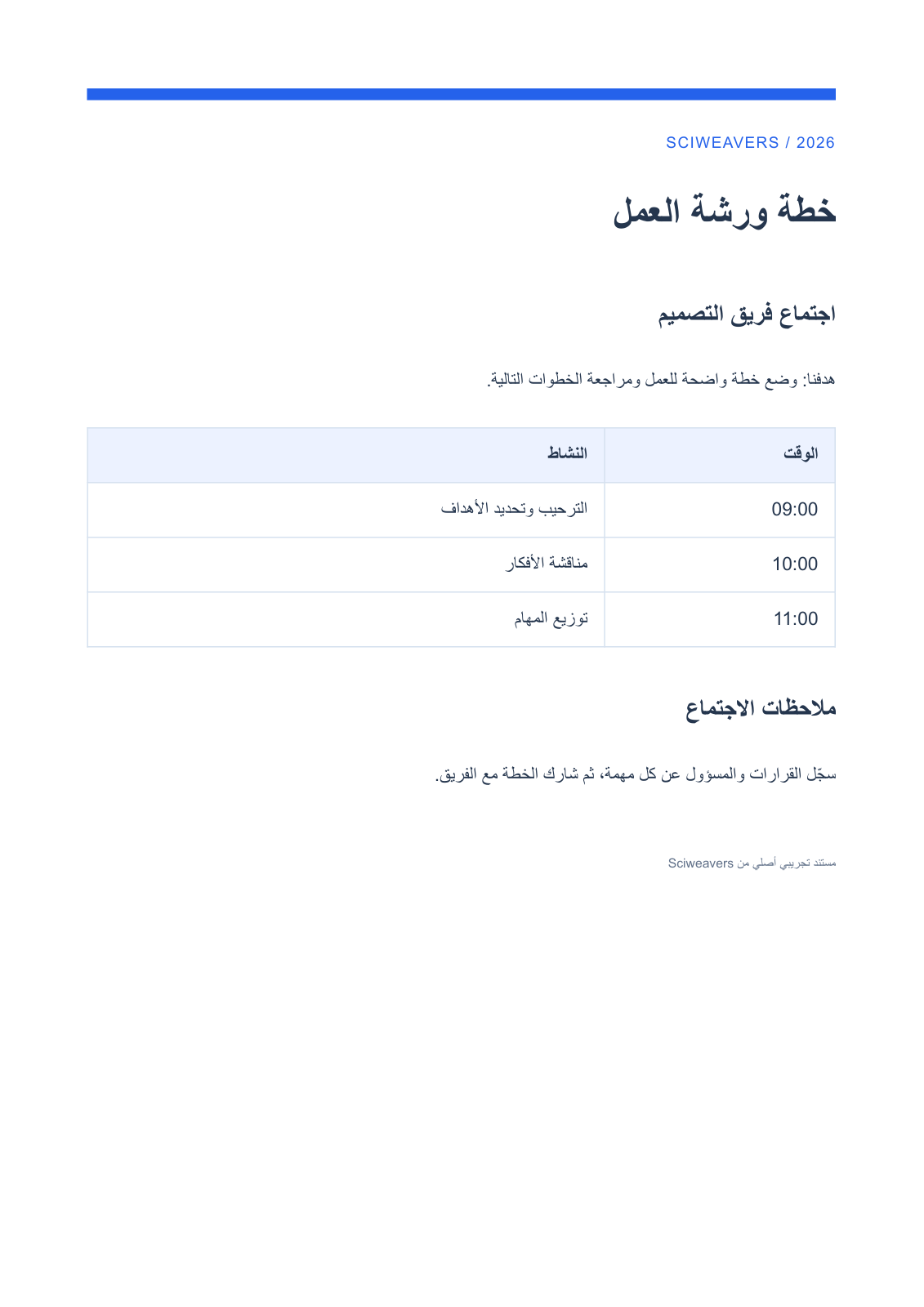
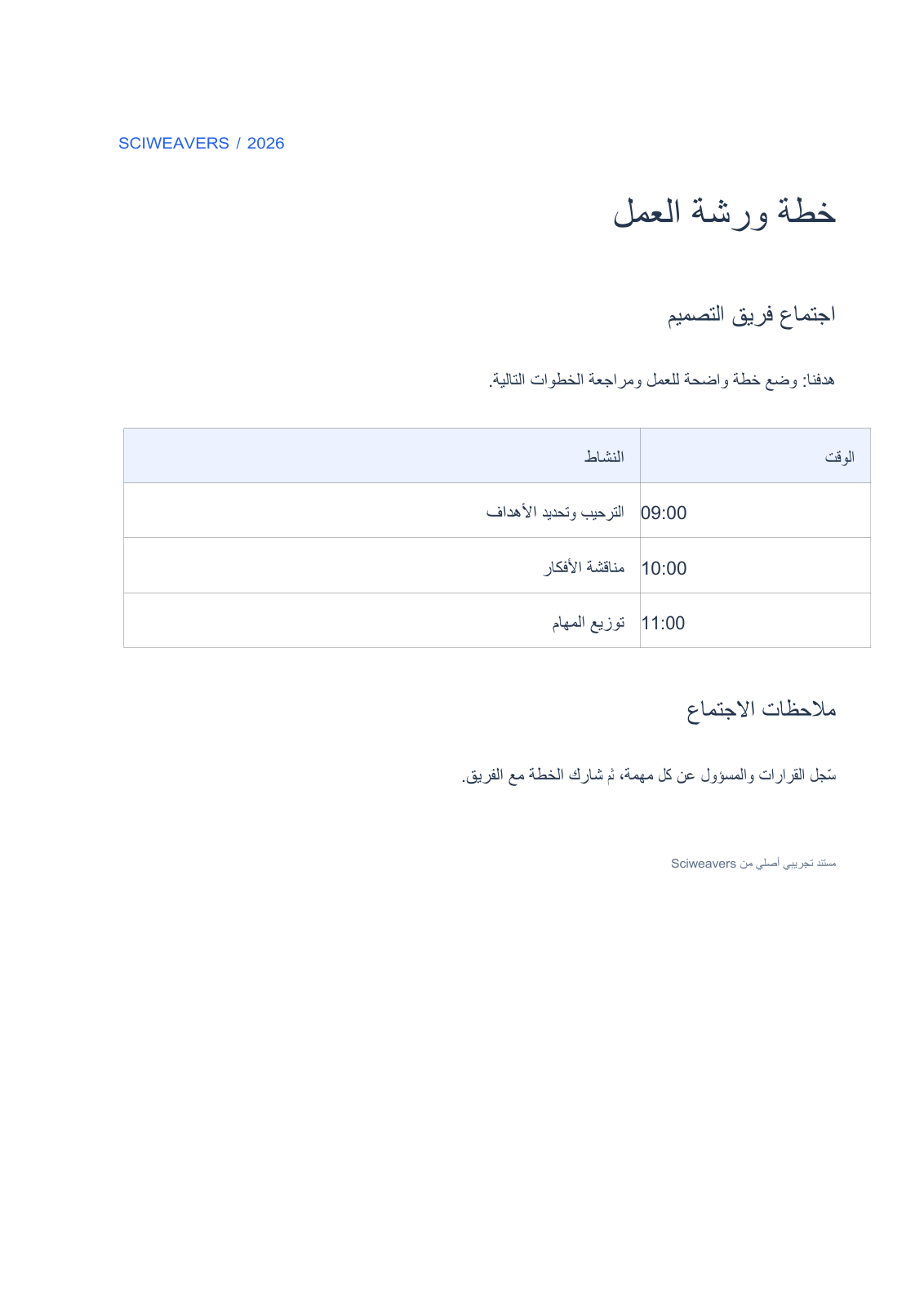

Open Arabic PDF to Word and add your PDF. Use it when a report, letter or handout already contains Arabic text and you need a Word copy for revision. The example is an original one-page workshop agenda with Arabic paragraphs, a schedule and Latin time values.
Start with a PDF containing text
Upload the Arabic PDF, or choose Use Sample PDF to open the language-specific workshop agenda shown here. Wait for the preview. This tool converts existing content; choosing its language-specific name does not translate the document.
If no page contains selectable text, the tool sends the document to PDF OCR. Recognition happens in that separate workflow. A mixed PDF can stay in Word conversion, so check scanned pages individually instead of assuming they will become editable text.
Choose the page range
Use Pages to enter a range such as 1-3, 5, or leave it blank for the document. Each conversion is limited to 50 pages; a longer selection includes only its first 50 pages.
For a long document, run separate ranges such as 1-50 and 51-100. Our source has one page, so leaving the field blank includes the full agenda.
Download and review the Word file
Choose Start and download the DOCX. Open it in a Word editor and compare the saved file with the original PDF.
The verified output has one page, editable right-to-left paragraphs and one Word table containing the schedule. Read joined letters, diacritics and punctuation in full sentences. Check Arabic paragraphs beside Latin times such as 09:00, then test selecting, copying and searching a familiar word in the Word file.
Check that each time still corresponds to the correct activity. Reconstructed fonts, spacing and text runs may need cleanup; the comparison deliberately shows the actual downloaded result.
Common questions
Will Arabic letters and spacing look exactly like the PDF?
No exact-match guarantee is appropriate. The verified example contains editable Arabic text and a Word table, but its spacing changes. Review letter joining, marks and search behavior before using the file as a final document.
Does this translate another language into Arabic?
No. It converts the text that is already in the PDF. Use Translate PDF if you need a translation, and review that text separately.
Try it with your document
Review the result, then save the version you need.